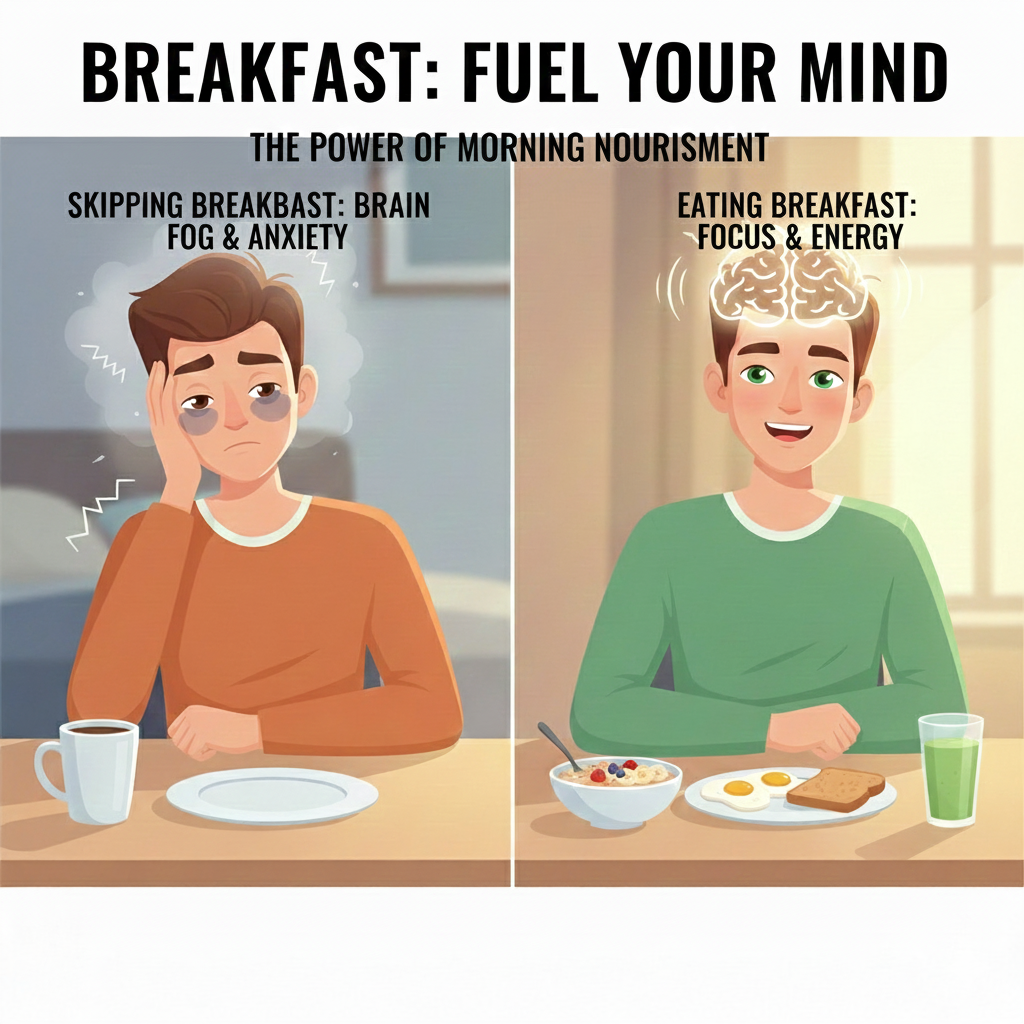
Skipping breakfast and mental health that morning meal isn’t just about hunger – it can affect your mind. Researchers increasingly find that breakfast habits are linked to mental health and brain performance. For example, CDC data show high-schoolers who regularly skip breakfast report more persistent sadness and hopelessness cdc.gov. Other studies in adults report that people who skip breakfast have worse cognitive scores and even faster brain aging sciopen.compmc.ncbi.nlm.nih.gov. In short, giving your brain its morning fuel may be crucial for staying alert and emotionally balanced.
Skipping breakfast and mental health: Effects on brain function
Our brains run on glucose from food. After an overnight fast, blood sugar is low; without breakfast your brain can literally start the day on empty. Doctors note that skipping breakfast “disrupts energy consumption in the brain,” often leading to “brain fog and trouble focusing” healthcare.msu.edu. In experiments, healthy adults who skipped breakfast performed worse on memory tests – they struggled to recall word lists and details until they finally refueled psychologytoday.com. Over the long term, regular breakfast-eaters tend to build healthier diets, and that shows up in better brain health. A large study of older adults found those who habitually skipped breakfast experienced more cognitive decline and early neurodegeneration than regular breakfast eaters sciopen.com. Conversely, Chinese researchers report that seniors (55+) who consistently ate breakfast scored higher on memory and attention tests than those who skipped it pmc.ncbi.nlm.nih.gov.
- Sharper focus and memory. A morning meal provides steady glucose to the brain. Studies show eating breakfast can improve memory recall and attention, whereas skipping it tends to dull concentration healthcare.msu.edupmc.ncbi.nlm.nih.gov.
- Stable blood sugar. Breakfast helps avoid mid-morning glucose dips. Without it, you’re more likely to feel tired, distracted or even irritable (“hangry”) as your blood sugar plummets healthcare.msu.edu.
- Cognitive longevity. Long-term data link daily breakfast with slower cognitive aging. One study found that older adults who ate breakfast regularly had slower memory decline than those who often missed it sciopen.compmc.ncbi.nlm.nih.gov.
How skipping breakfast affects mood and mental health
Beyond thinking skills, breakfast affects emotions. Numerous studies associate skipping breakfast with worse mood and mental health symptoms. For instance, a large meta-analysis found that people (both adolescents and adults) who skip breakfast have significantly higher odds of depression and anxiety pmc.ncbi.nlm.nih.gov. In one survey, teens who never ate breakfast were far more likely to report ongoing feelings of sadness or hopelessness cdc.gov. Similarly, a Hong Kong study in young adults showed that frequent breakfast skippers had more depressive symptoms and impulsivity than regular breakfast-eaters frontiersin.org. Experts suspect this is partly because skipping breakfast triggers stress hormones. In one controlled study, women who habitually skipped breakfast showed elevated cortisol levels (the stress hormone) throughout the morning pubmed.ncbi.nlm.nih.gov. Those cortisol surges – and the hungry, shaky feeling that comes with low blood sugar – can heighten anxiety and irritability. In other words, missing breakfast may put your body into stress-response mode, which over time can undermine mood.
Key consequences of skipping breakfast include:
- Higher depression/anxiety risk: People who skip breakfast are more likely to report depressive symptoms and stress pmc.ncbi.nlm.nih.govfrontiersin.org.
- Poor concentration: Without morning fuel, memory and attention suffer psychologytoday.comhealthcare.msu.edu.
- Elevated stress hormones: Skipping breakfast can cause higher cortisol, which fuels tension and worry pubmed.ncbi.nlm.nih.gov.
- Faster cognitive decline: Habitual skippers show more rapid memory decline over the years sciopen.com.
Benefits of breakfast for mental health and focus

Making time for breakfast can flip these risks into benefits. A balanced morning meal helps stabilize mood and mind:
- Better focus and energy. Eating breakfast gives your brain a steady supply of glucose, helping you feel alert and able to concentrate. Studies note improved attention and memory performance after a healthy breakfast healthcare.msu.edupmc.ncbi.nlm.nih.gov.
- Improved mood and stress resilience. People who eat breakfast tend to report less stress and fewer “low mood” days. By preventing blood-sugar crashes and cortisol spikes in the morning, breakfast can keep you calmer and happier pubmed.ncbi.nlm.nih.govpmc.ncbi.nlm.nih.gov.
- Nutritional boost. Regular breakfast eaters usually get more vitamins, fiber, and nutrients overall. These nutrients (like B vitamins, vitamin C, and healthy fats) support neurotransmitter production and brain health pmc.ncbi.nlm.nih.gov.
- Better performance. Studies link breakfast-eaters with higher productivity and better cognitive test scores in school or work pmc.ncbi.nlm.nih.govcdc.gov. Simply put, a good breakfast helps set the tone for a productive day.
Tips for Healthy Breakfast Habits
- Plan simple meals ahead. Prepare quick options like overnight oats, yogurt with fruit, or whole-grain toast with peanut butter. Having ingredients on hand makes it easier to grab breakfast.
- Include protein and fiber. Foods like eggs, nuts, whole grains and vegetables keep blood sugar steady. They help you feel fuller, reduce hunger cravings later, and give your brain long-lasting fuel.
- Start small if needed. Even a piece of fruit or a smoothie is better than nothing. The key is to avoid running too long on empty, especially if you already feel mentally foggy without food.
- Stay consistent. Try to eat breakfast around the same time each day (within an hour of waking, if you can). Your body will adapt and you’ll likely start feeling out-of-sorts if you miss it.
Conclusion
Skipping breakfast may seem harmless, but mounting evidence suggests it can harm your mental health over time. Habitually missing the morning meal is tied to worse mood, higher stress hormones, and even faster memory decline pmc.ncbi.nlm.nih.govsciopen.com. On the flip side, a nutritious breakfast offers stable energy, better focus and a mental health boost. If you tend to skip breakfast, consider starting small – maybe a bowl of oatmeal or a protein smoothie – and see how your mood and mind respond. Your brain will thank you for the extra fuel!
How do you feel after a morning meal? Share this article or your own breakfast tips with friends, and consider making your breakfast routine a priority for better mental well-being.
Sources: Research studies and expert analyses on breakfast’s effects on cognition, mood, and brain health healthcare.msu.edusciopen.comfrontiersin.orgpmc.ncbi.nlm.nih.gov, and health surveys by CDC